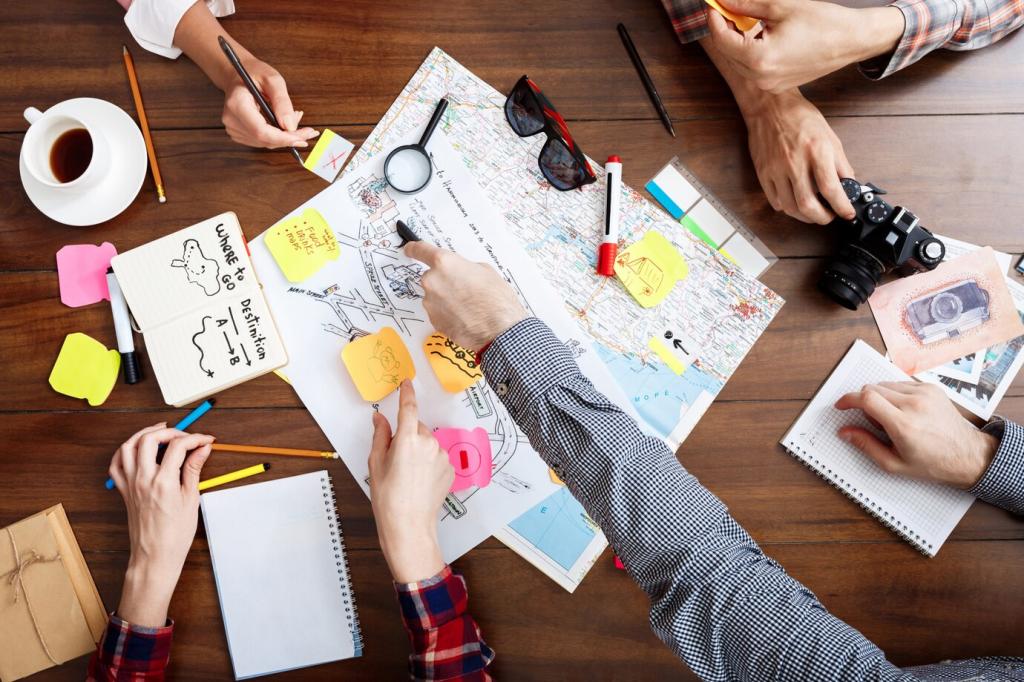
Chosen theme: Street Photography and the Spatial Imagination. Step into the city as a living stage where light, distance, and human gesture shape rooms in the open air. Join us as we reimagine pavements as corridors, corners as thresholds, and crowds as moving architecture. Subscribe, comment, and share your most spatially surprising frame.

The City as a Canvas for Spatial Imagination

Train your eye to read distances before faces: the gap between figures, the air around a gesture, the negative space that lets a moment bloom. Pause, breathe, and let the city’s volumes reveal their quiet invitations to frame.

Compositional Tools That Sculpt Urban Depth

Place a bold foreground element—a bicycle wheel, a shoulder, a sign—then allow breathable negative space beyond it. The tension between anchor and openness pulls viewers forward, transforming a flat scene into a felt corridor of possibility.

Compositional Tools That Sculpt Urban Depth

Curbs, rails, and shadows can shepherd the eye toward a vanishing point, while a turning pedestrian arcs the rhythm. Let line and motion collaborate, guiding attention through multiple planes that suggest journeys inside a single captured second.

Light, Shadow, and the Architecture of Feeling

Midday Hard Light as a Spatial Chisel

When the sun is fierce, shadows carve deep alleys where none existed. Use that chisel to isolate gestures, letting dark planes enclose a subject. Midday becomes a sculptor, cutting rooms from sidewalks with decisive, dramatic contrast.

Blue Hour and the Breath Between Buildings

As daylight thins, façades soften and air seems to widen. Blue hour loosens edges, inviting a slower read of distance and glow. Stand still and watch the city inhale, then exhale a frame that feels hushed and spacious.

Night Grids: Windows, Neon, and Depth

At night, windows flicker like stacked rooms, neon spills in color pools, and headlights rake across textures. Use those grids and spills to imply levels and corridors, composing a nocturnal maze that viewers can wander with their eyes.

Mapping Your Drift: Psychogeography in Practice

Choose a simple rule—turn left at every second alley, follow the strongest shadow, chase the echo of footsteps—and keep it playful. These constraints tease out overlooked corridors and plazas, making your spatial imagination both curious and disciplined.

Ethical Presence in Shared Spaces

Even in public, dignity matters. Read body language, accept no without friction, and lower the camera when asked. Respect creates safer space, and paradoxically, that safety expands your access to authentic, unguarded moments worth keeping.

Ethical Presence in Shared Spaces

Every neighborhood arranges space differently: markets that invite closeness, plazas that prefer distance. Learn local customs before shooting, and your presence will harmonize with the room’s unspoken rules, yielding more honest, welcomed photographs.

Sequencing Space: Telling Journeys With Images

Open with an establishing frame that breathes, then move closer, layering tension, and finally release with a quiet, spacious exit. This spatial narrative invites viewers to walk the scene with you, step by intentional step.

Practice Prompts and Community Walks

Find a scene with a foreground anchor, a mid‑ground gesture, and a reflective background. Share your image and process, describing how each layer shaped space. Tag your post so we can feature standout journeys in upcoming newsletters.

Practice Prompts and Community Walks

Post a link to a photograph that feels like a room you could walk into. What were the cues—light, line, crowd flow—that built that sensation? Encourage others, ask questions, and help sharpen our collective spatial literacy.
Ponerivaxolaron
Privacy Overview

This website uses cookies so that we can provide you with the best user experience possible. Cookie information is stored in your browser and performs functions such as recognising you when you return to our website and helping our team to understand which sections of the website you find most interesting and useful.